

The death of a family member or loved one is an emotional and often overwhelming experience. At a time when family members are grieving, they are also faced with numerous practical and legal responsibilities that may seem confusing or daunting.
One of the most common questions we are asked at GM Law is, “What happens now?”
The answer depends on a range of factors, including whether the deceased left a valid Will, the nature and value of their assets, and whether Probate or Letters of Administration are required.
Understanding the estate administration process can help reduce uncertainty and ensure that the deceased’s affairs are managed efficiently and in accordance with Queensland law.
This guide explains:
- the key steps involved in administering an estate in Queensland
- the responsibilities of an executor or administrator
- and when professional legal advice should be obtained.
What Is Estate Administration?
Estate administration — also referred to as deceased estate administration — is the legal process of collecting, managing and distributing the assets of a deceased person.
The process generally involves:
- identifying the deceased’s assets and liabilities;
- determining whether there is a valid Will;
- identifying the executor or administrator;
- obtaining Probate or Letters of Administration where required;
- paying debts and liabilities;
- preparing estate accounts; and
- distributing the estate to beneficiaries.
Every estate is different. Some can be administered relatively quickly, while others involving businesses, investment properties, trusts or family disputes may take considerably longer.
Step 1 – Locate the Original Will
The first step after someone dies is to determine whether they left a valid Will.
The original signed Will is an important legal document because it identifies:
- the executor;
- the beneficiaries;
- any specific gifts;
- guardians for minor children (where applicable); and
- how the remainder of the estate is to be distributed.
The original Will may be held:
- at the deceased’s home;
- in a solicitor’s safe custody;
- in a bank safe custody facility;
- by the executor; or
- in another secure location.
If the original Will cannot be located, legal advice should be obtained promptly, as this may affect the administration of the estate.

Step 2 – Obtain the Death Certificate
The executor or next of kin should obtain an official death certificate for the deceased.
The funeral director will usually arrange for the death to be registered. Once registered, the death certificate can be obtained from the Queensland Registry of Births, Deaths and Marriages.
The death certificate will commonly be required when dealing with:
- banks and financial institutions;
- superannuation funds;
- insurers;
- aged-care providers;
- government agencies;
- utility providers; and
- applications for Probate or Letters of Administration.
It is important to keep the original death certificate in a safe place. Certified copies can generally be provided to organisations that require evidence of the death.
Step 3 – Arrange the Funeral
Funeral arrangements are usually made by the deceased’s next of kin or the executor named in the Will.
Many people leave written funeral wishes in their Will or in a separate document. While these wishes are not always legally binding, they provide valuable guidance to the family and executor.
Funeral expenses are generally payable from the estate, although they are often paid initially by family members and reimbursed once estate funds become available. In some cases, the deceased’s bank may agree to pay the funeral director directly from funds held in the deceased’s account before a grant is obtained, subject to the bank’s requirements and there be sufficient funds.
Step 4 – Identify the Executor
If there is a valid Will, it usually appoints one or more executors. The executor of a will in QLD is the person given legal responsibility for carrying out the terms of the Will.
The executor is responsible for administering the estate and ensuring the deceased’s wishes are carried out.
An executor has significant legal responsibilities and must act honestly, carefully and in the best interests of the estate.
Common responsibilities include:
- protecting estate assets;
- communicating with beneficiaries;
- obtaining valuations where required;
- dealing with banks and financial institutions;
- arranging insurance where necessary;
- lodging legal applications;
- paying debts; and
- distributing the estate.
Being appointed as an executor is an important responsibility, and professional legal assistance is often beneficial.
Renunciation – Declining the Role of Executor
A person appointed as executor is not obliged to accept the role. If they choose not to act, they must sign a formal renunciation — a signed document formally giving up the appointment — before an alternative executor or administrator can step in. Because renouncing has lasting consequences, it is sensible to obtain legal advice before deciding.
Step 5 – Identify the Estate Assets
Before an estate can be administered, the executor must determine what assets the deceased owned.
These may include:
- the family home;
- investment properties;
- bank accounts;
- shares;
- managed investments;
- motor vehicles;
- business interests;
- life insurance;
- personal belongings;
- digital assets; and
- money owed to the deceased.
The executor should also identify liabilities, including:
- mortgages;
- personal loans;
- credit cards;
- taxation liabilities;
- utility accounts;
- amounts owing to Services Australia, including any Centrelink overpayments; and
- other outstanding debts.
Preparing a complete list of assets and liabilities assists in determining the value of the estate and whether Probate is likely to be required.
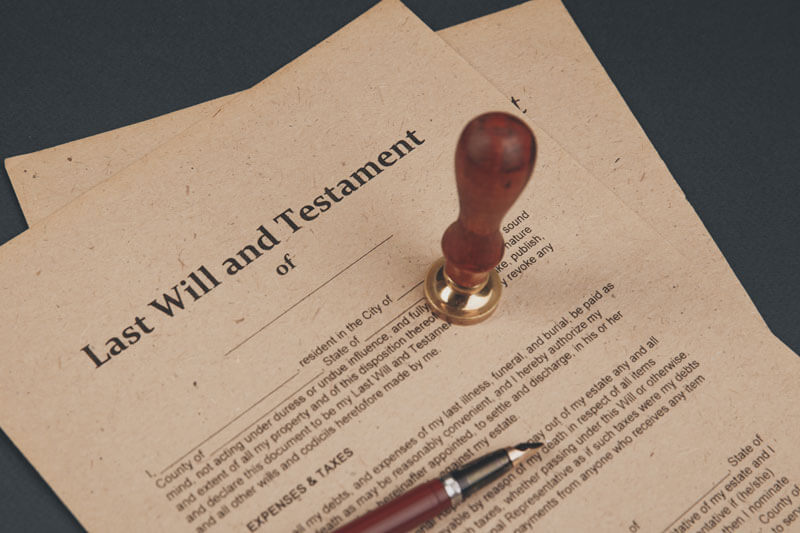
Step 6 – Determine Whether Probate Is Required
One of the most common misconceptions is that Probate is required for every estate.
In reality, most estates require probate, even smaller estates.
Whether Probate is required or not depends on factors such as:
- the value of the estate;
- the nature of the assets;
- the requirements of banks or financial institutions;
- whether real property is owned solely by the deceased; and
- whether institutions require a formal Grant before releasing assets.
Where Probate is required, the executor generally applies to the Supreme Court of Queensland for a Grant of Probate.
This confirms that the Will is legally recognised and that the executor has authority to administer the estate.
GM Law can apply for probate on behalf of the executor. You can learn more about our estate planning and administration services and how we support executors through every stage of the process.
When Probate is required:
- Real property in the deceased’s sole name. When a person dies owning real estate — houses, units, or land — probate is almost always needed before the property can be transferred or sold,
- Bank accounts above the institution’s threshold. Most Queensland financial institutions will release funds up to around $20,000–$25,000 without a grant, and above these thresholds typically require probate — though each institution sets its own threshold, commonly between $20,000 and $50,000.
- Share holdings above the registry’s threshold. Shares in publicly listed companies generally require probate if the holding exceeds roughly $10,000–$30,000, depending on the share registry’s policy.
- Superannuation paid to the estate. Where a death benefit is being paid to the “Estate” rather than to a named beneficiary — i.e. superannuation without a binding death benefit nomination.
Publishing a Notice of Intended Application
Before lodging a Probate application, the executor is generally required to publish a Notice of Intended Application in the Queensland Law Reporter. This notice gives anyone with a claim against the estate the opportunity to come forward, and there is a mandatory waiting period (usually at least 14 days) for objections or claims before the application can proceed.
Notifying the Public Trustee
As part of the application process, the executor must also notify the Public Trustee of Queensland of the intended Probate application. This is a standard procedural requirement in Queensland.
The Three Types of Grant
A grant of representation is a Supreme Court order confirming who is authorised to administer an estate. In Queensland there are three main grant types:
- a grant of probate in QLD — where there is a valid Will and an executor named in the Will is applying;
- a grant of letters of administration of the Will — where there is a valid Will but someone other than a named executor is applying (the applicant becomes an administrator); and
- a grant of letters of administration on intestacy — where there is no valid Will, and the applicant becomes an administrator.
Documents Needed for a Probate Application
A Probate application to the Supreme Court of Queensland typically requires:
- the original Will and any codicils;
- the official death certificate;
- an executor’s affidavit setting out the executor’s identity, the estate’s assets and liabilities, and confirmation that the notice of intention was published; and
- an affidavit of publication confirming the notice was published.
Indicative Timeframes
As a general guide, a Grant of Probate is often issued around 4 to 6 weeks after the notice of intended application is published, depending on the complexity of the estate and the court’s workload. It is also worth noting that some estates — for example, certain property transfers dealt with under the Land Titles Act — may not require a formal grant at all. Timeframes vary with the individual circumstances of each estate.
Step 7 – Collect the Estate Assets
Once the executor has authority to act (and Probate has been obtained where required), estate assets can generally be collected.
- This may involve:
- opening an estate bank account;
- closing the deceased’s bank accounts;
- recovering any refundable accommodation deposit;
- selling or transferring shares;
- transferring investments;
- collecting refunds;
- receiving insurance proceeds;
- transferring or selling real estate; and
- recovering money owed to the deceased.
- During this stage, the executor must keep appropriate records and ensure estate funds remain separate from personal funds.
Step 8 – Pay Debts and Expenses
Before beneficiaries receive their inheritances, the executor must ensure the estate’s debts have been properly addressed.
Typical expenses include:
- funeral costs;
- legal expenses;
- accounting fees;
- outstanding loans;
- taxation liabilities;
- rates and utilities;
- insurance premiums; and
- other legitimate debts.
Executors should exercise caution before distributing estate assets, as distributing an estate too early may expose an executor to personal liability if outstanding liabilities later emerge.
Executors should obtain advice before making a final distribution. As a general guide, our firm often recommends that final distribution occur between 9 and 12 months after the date of death. However, the appropriate timing will depend on matters including known or threatened claims, outstanding liabilities, taxation matters and the nature of the estate.
Step 9 – Distribute the Estate
Once debts have been paid and the administration has been completed, the executor distributes the estate in accordance with the Will.
This may involve:
- transferring property;
- paying cash gifts;
- transferring investments;
- distributing personal belongings; and
- dividing the remaining estate between beneficiaries.
Executors should keep accurate records of all distributions and obtain appropriate acknowledgements where necessary.
What If There Is No Will?
If a person dies without leaving a valid Will, they are said to have died intestate.
In these circumstances:
- an eligible person generally applies for Letters of Administration;
- Queensland legislation determines who inherits the estate; and
- no executor has been appointed by the deceased.
Because there is no Will and no named executor, a letter of administration is required to give an eligible person authority to manage the estate. The administration process is often more complicated and may take longer than where there is a valid Will.
Taxation Responsibilities When Managing a Deceased Estate
An often overlooked part of managing deceased estate affairs is dealing with the deceased’s and the estate’s tax obligations. Executors should generally seek advice from an accountant or financial adviser, but the key points are set out below.
- Notifying the ATO. The executor should notify the Australian Taxation Office (ATO) of the death and complete the relevant form, which also records the executor’s role. This helps stop further correspondence being sent to the deceased.
- Lodging a Final Tax Return. A final — or date-of-death — tax return may need to be lodged for the deceased, covering income up to the date of death, such as employment income, bank interest and dividends.
- The Estate’s Own Tax File Number. Where the estate continues to earn income after the death, it may need to apply for its own tax file number (TFN) and lodge its own returns on post-death income and any capital gains on the sale of estate assets.
- Taxes That May Apply. Australia does not have an inheritance tax or estate tax. However, depending on how assets are managed and distributed, other taxes may apply — including Capital Gains Tax, stamp duty, and tax on superannuation death benefits.
- HECS/HELP Debts and Tax Losses. Any outstanding HECS/HELP debt is dealt with through the final tax return, based on the income earned in the relevant year. Accumulated capital losses can be applied in the final return but cannot be carried forward by the estate.
How Is the Executor of a Will in Queensland Different from Other States in Australia?
The core role of an executor — collecting assets, paying debts, and distributing the estate to beneficiaries — is broadly the same across every Australian state and territory. What differs is the legal framework, procedure and terminology surrounding the role, because succession law is set by each state rather than nationally.
Governing Legislation
In Queensland, executors operate under the Succession Act 1981 (Qld), with probate procedure set out in the Uniform Civil Procedure Rules 1999 (Qld). Each other state has its own equivalent legislation, so the detailed rules governing the administration of a deceased estate are Queensland-specific even though the broad duties look similar elsewhere.
Probate Is Not Always Mandatory
Queensland is one of the states where Probate is not required for every estate — some smaller estates, or estates where assets are held jointly, can be administered without a formal grant. In practice, most substantial estates still need one, but the thresholds and institutional requirements differ from state to state.
Order of Paying Debts
The order in which debts are paid from a solvent estate is set out in the Succession Act 1981 (Qld) and operates differently in Queensland to other states and territories. An executor administering estates in more than one state cannot assume the same priority rules apply everywhere.
Application Forms and Notice Periods
The mechanics of applying for a grant vary by jurisdiction — the forms, the required affidavits, and the notice periods all differ. For example, New South Wales runs most uncontested probate applications through an online registry and expects applications to be lodged within six months of death, whereas Queensland has its own forms and publication requirements.
Where Probate Is Granted, and Resealing
A grant issued by one state’s Supreme Court only has legal force in that state, and Probate is generally granted in the state where the deceased was domiciled rather than where they died. If a Queensland executor needs to deal with assets located interstate, they must usually apply to have the Queensland grant “resealed” in the other state — and the reverse applies where an interstate grant needs to be resealed in Queensland to deal with Queensland assets. This makes cross-border estates more complex.
Who Can Act, and Where They Live
On this point Queensland is relatively permissive and broadly in line with other states: any adult with legal capacity can act as executor, and there is no restriction on the executor living interstate or overseas. Practical friction — such as witnessing requirements, notarisation of overseas signatures, and banks imposing conditions on non-resident executors — comes from procedure rather than a Queensland-specific bar. For tailored guidance on deceased estate management across state lines, our estate planning and administration team can help.
How Long Does Estate Administration Take?
There is no fixed timeframe.
A relatively straightforward estate may sometimes be completed within several months.
However, more complex estates may take considerably longer, particularly where they involve:
- real estate;
- businesses;
- overseas assets;
- taxation issues;
- family disputes; or
- Court proceedings.
Executors should avoid rushing the administration process, as ensuring assets, liabilities and legal requirements have been properly addressed is essential.
Common Mistakes Executors Should Avoid
Some of the more common mistakes include:
- distributing assets too early;
- failing to identify all liabilities;
- mixing estate money with personal funds;
- failing to keep accurate records;
- ignoring taxation issues;
- poor communication with beneficiaries; and
- attempting to administer a complex estate without professional advice.
Seeking legal assistance early can often avoid costly mistakes later. This is particularly important because an executor may incur personal liability if estate assets are administered or distributed improperly.
Frequently Asked Questions
Can an executor refuse to act?
Yes. A person appointed as executor is generally not obliged to accept the role. If they choose not to act, alternative arrangements may be available depending on the Will and the circumstances.
Do beneficiaries receive their inheritance immediately?
Not usually. Estate assets generally cannot be distributed until the executor has identified assets and liabilities, obtained Probate where required, paid debts and completed the administration process.
Can an executor sell the deceased’s house?
Yes, provided the Will authorises it or it is otherwise appropriate for the administration of the estate. The executor must act in the best interests of the estate and the beneficiaries.
What happens if family members disagree?
Disagreements can arise regarding the interpretation of the Will, administration of the estate or entitlement to inherit. Many disputes can be resolved through legal advice and negotiation, although some matters require Court determination.
How GM Law Can Help
Administering an estate can be a significant responsibility, particularly during a difficult time for the family.
At GM Law, we assist executors and beneficiaries throughout Queensland with a variety of estate administration. Our experienced solicitors can provide practical advice and assistance with:
- Probate applications;
- Letters of Administration;
- advising executors regarding their duties;
- estate asset transfers;
- sale or transfer of estate property;
- estate distributions;
- beneficiary issues; and
- general estate administration.
Whether you require assistance with a straightforward estate or a more complex administration, we are committed to guiding you through the process with practical advice and clear communication.
Conclusion
The administration of a deceased estate involves much more than simply reading a Will and distributing assets. Executors and administrators have important legal responsibilities and must ensure the estate is administered properly before beneficiaries receive their inheritances.
While every estate is different, understanding the general process can help families know what to expect and avoid unnecessary complications.
If you have recently lost a loved one or have been appointed as an executor, obtaining early legal advice can make the administration process smoother, reduce the risk of mistakes and provide confidence that the estate is being administered correctly.
At GM Law, we are here to help you navigate the estate administration with professionalism, compassion and practical legal advice.
This guide provides general information about estate administration in Queensland. It does not constitute legal, taxation or financial advice and should not be relied upon as a substitute for advice regarding your particular circumstances. Laws and administrative requirements are subject to change over time.